Practical guide
Fire alarm at work: what to do without panic
A clear sequence of actions in the event of smoke, a burning smell or an alarm - from message to safe exit.
- Author
- SafetyHub editorial team
- Publication date
- September 2, 2026
- Reading time
- 3 minute read
Contents
During a fire, the brain first tries to check whether “everything is serious.” This is a dangerous delay. Smoke, a burning smell, a flash or a signal from a warning system is a sufficient reason to immediately act according to the site plan.
Four steps when the alarm sounds
- Give the signal in the prescribed manner and call 101 or 112. State the address, location of the fire and your last name; do not end the call before the operator.
- Stop working. If instructed to do so and does not pose a risk, stop the equipment safely.
- Follow the signs to the nearest available emergency exit. Do not use the elevator and do not return to collect your belongings.
- Arrive at the collection point, check in with the person in charge and remain there until further instructions.
If there is smoke on the route
Do not walk into thick smoke or open a door where there is noticeable heat or smoke. Use another designated path. Move calmly, don't push people, help someone who is confused or has trouble finding their way, but don't create an extra hazard for yourself.
| Situation | What to do |
|---|---|
| Alarm sounded, but no smoke visible | Start evacuation anyway as planned |
| Normal exit blocked | Proceed to another designated exit |
| Colleague wants to go back for the phone | Stop him and continue towards the exit |
| A person cannot evacuate without assistance | Inform the responsible and emergency services of the exact location |
| You are already out | Do not re-enter without permission from emergency services |
When fire extinguisher is acceptable
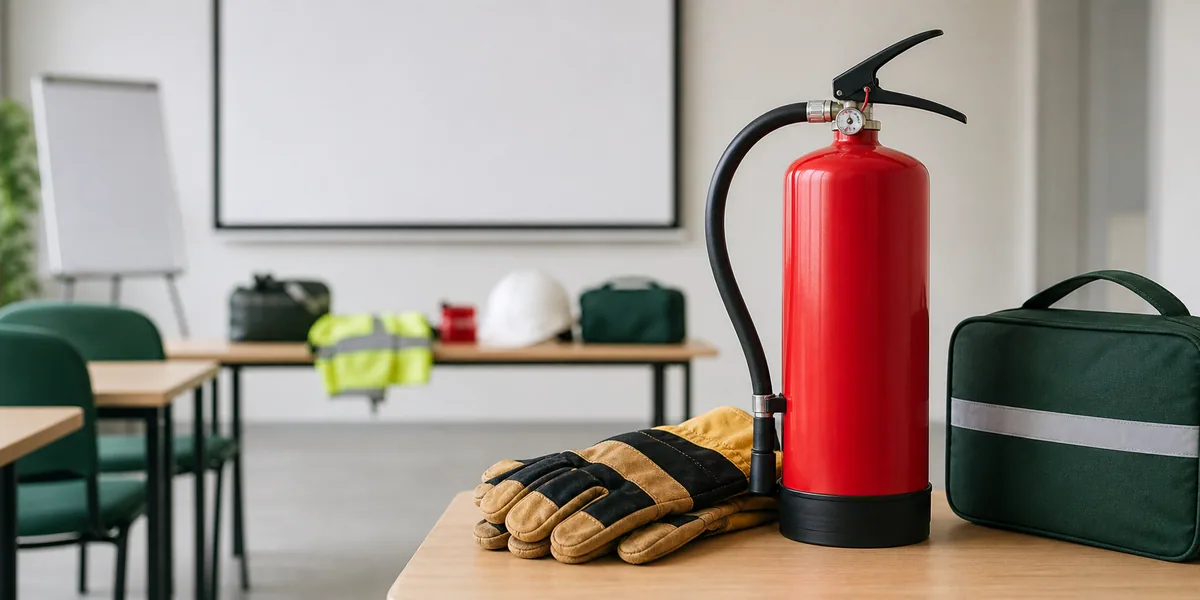
The primary extinguishing agent is used only by trained people, if the fire is small, the agent is suitable for this type of fire, the room is not filled with smoke, and the path to the exit remains behind. If the fire grows, smoke appears, or the remedy does not work immediately, leave.
After evacuation
At the assembly point, do not go home or leave the site until you have been accounted for; otherwise rescuers may search for you inside the building. Report any seat of fire, blocked passage or person you saw remaining inside. Do not spread assumptions—report only what you personally observed.
Good evacuation looks boring: early signal, familiar route, calm movement and accurate counting of people.
Regulatory sources (2)
Keep reading
More practical guidance
Practical guide
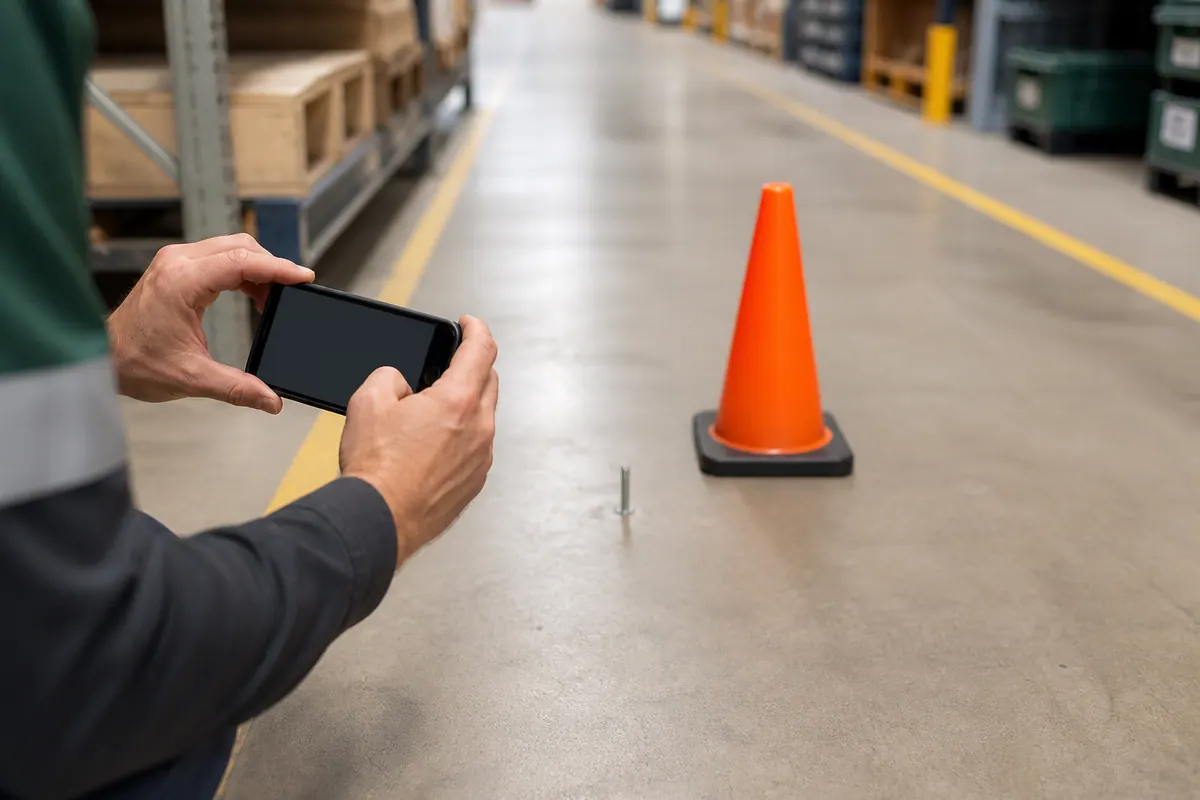
A near miss: why hazardous situations must be reported
What to write down after a near-incident, how to separate facts from guesswork and turn the signal into real improvement.
Read article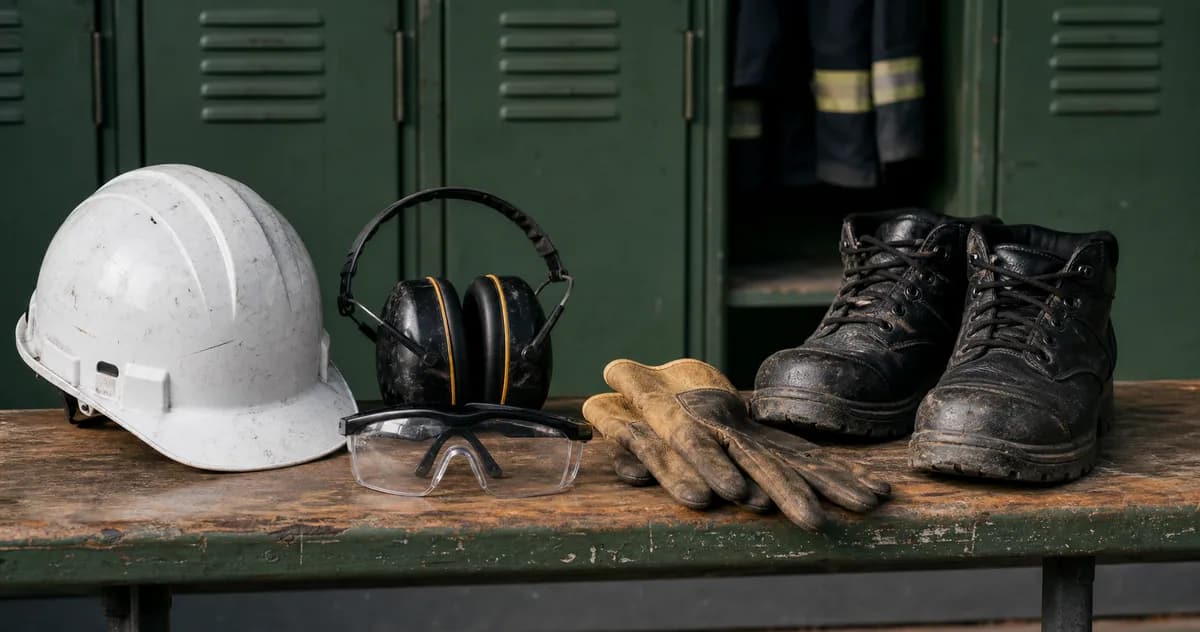
Practical guide
PPE beyond box-ticking: how to check protection before work
Helmet, goggles, gloves and respirator provide protection only when they are suitable for the task, are in good working order and are worn correctly.
Read article
Practical guide
First day at a new workplace: 12 questions before the start
What a newbie should know about risks, routes, equipment, PPE and communications before attempting their first independent task.
Read article