Practical guide
How to prepare for a safety test without cramming
A method of short lessons that helps you understand the logic of safe decisions, calmly pass the test and apply knowledge in your work.
- Author
- SafetyHub editorial team
- Publication date
- September 2, 2026
- Reading time
- 3 minute read

Contents
A safety test is not meant to test rote recall of wording. The useful goal of preparation is to recognize a hazard quickly and choose an action that protects people first, then equipment and the process. This approach also helps with unfamiliar questions.
First, assemble a topic map
Open the course syllabus and write out the major sections: workplace hazards, PPE, fire, first aid, emergency procedures, safe operation of equipment. Mark the topics in three colors: I understand, I’m confused, I haven’t studied. Start not with your favorite section, but with the last group.
Teach through scenarios
| Question | What does it check |
|---|---|
| What is hazard here? | Ability to notice the source of harm |
| Who might get hurt? | Understanding the area and consequences |
| What to do first? | Action priority |
| When not to continue? | Safe work limit |
For example, instead of memorizing a list about a damaged cable, imagine the scene: a cable sparks in a wet passage. hazard - current and fire; you can't get close; first limit access and call a trained specialist. One scenario binds several rules at once.
Solve the error, don’t memorize the letter
- Answer without prompting and mark your confidence: sure, doubtful or guessing.
- After checking, explain in your own words why the correct option is safer than the others.
- Find a rule or course fragment that supports the solution.
- Create a similar example from your own work.
- Repeat this question the next day, mixing it with other topics.
What to do on test day
- check your device, internet, charge and quiet place in advance;
- carefully read the negations and restrictions: “impossible”, “except”, “first of all”;
- first exclude clearly dangerous options: unauthorized repairs, entering a dangerous zone, concealing an event;
- do not change the answer just because of anxiety - change it if you find a specific error in the reasoning;
- if the format allows, leave a few minutes for questions where you were in doubt.
Three day plan
| Day | Task |
|---|---|
| First | Topic map, study of weak sections, 10 test questions |
| Second | Error scenarios, mixed mini-test, repeat without prompt |
| Third | Short repetition of brake lights and calm test performance |
Good preparation ends not with “I remember the answer,” but with “I understand why it’s safer.”
Keep reading
More practical guidance

Practical guide
A near miss: why hazardous situations must be reported
What to write down after a near-incident, how to separate facts from guesswork and turn the signal into real improvement.
Read article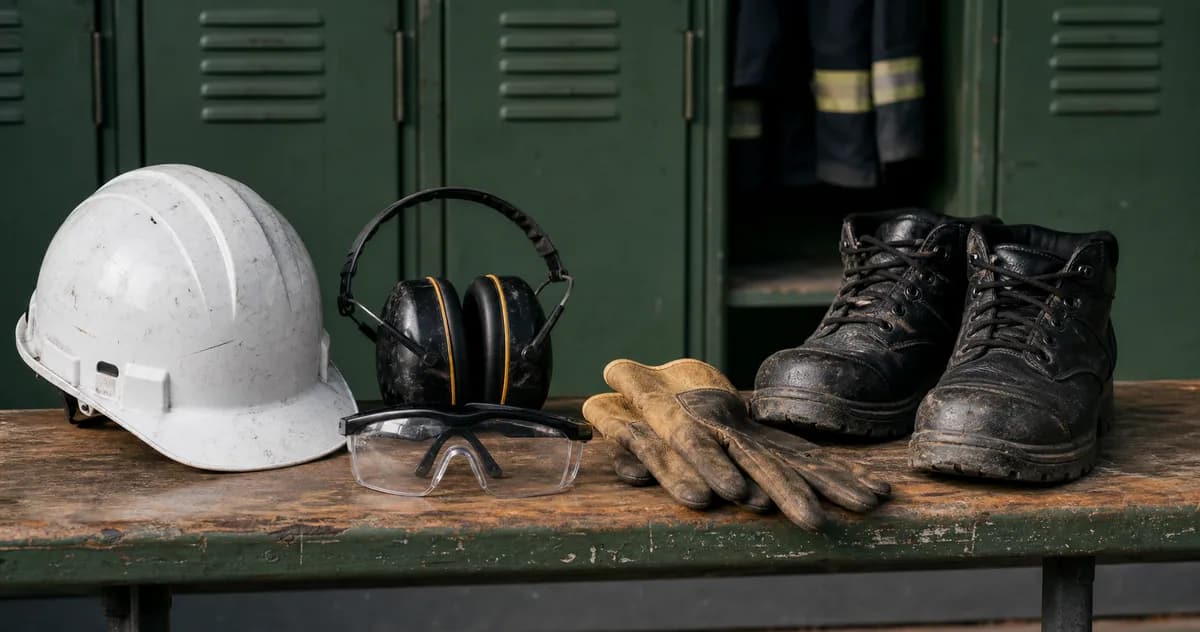
Practical guide
PPE beyond box-ticking: how to check protection before work
Helmet, goggles, gloves and respirator provide protection only when they are suitable for the task, are in good working order and are worn correctly.
Read article
Practical guide
Fire alarm at work: what to do without panic
A clear sequence of actions in the event of smoke, a burning smell or an alarm - from message to safe exit.
Read article